
1147 words/5-minute read
Introduction
One of the most rewarding parts of my work is facilitating training sessions with teams who genuinely want to improve how they work. When people show up curious, engaged, and eager to learn new techniques, it’s energizing.
But occasionally something happens during a class discussion that reminds me why our work at Champagne Collaborations goes far beyond training alone.
Because sometimes the biggest obstacle isn’t a lack of skills.
Sometimes it’s the environment those skills are expected to operate in.
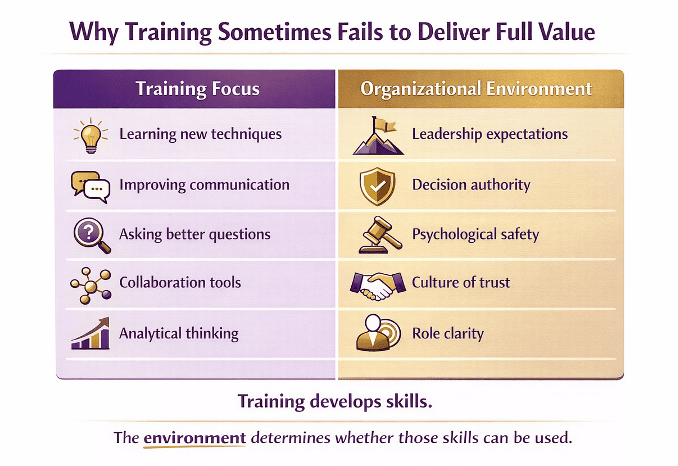
Training can introduce powerful techniques and practical tools. But if the surrounding culture and leadership expectations don’t support those behaviors, the value of the training can stall before it ever reaches real impact.
And that’s frustrating—not just for the trainer, but for the participants who genuinely want to apply what they’ve learned.
Recently, during classes focused on stakeholder collaboration and communications, two conversations surfaced that illustrate this challenge perfectly.
Root Cause #1: When Leaders Provide the Solution Instead of the Problem
One of the goals we focus on in our training is helping analysts and project professionals ask better questions.
Not questions that make them look smart.
Questions that help them lead both down to their teams and up to their leadership. Questions that help leaders stay in the role they should be playing—setting direction.
Strong teams operate best when leaders focus on: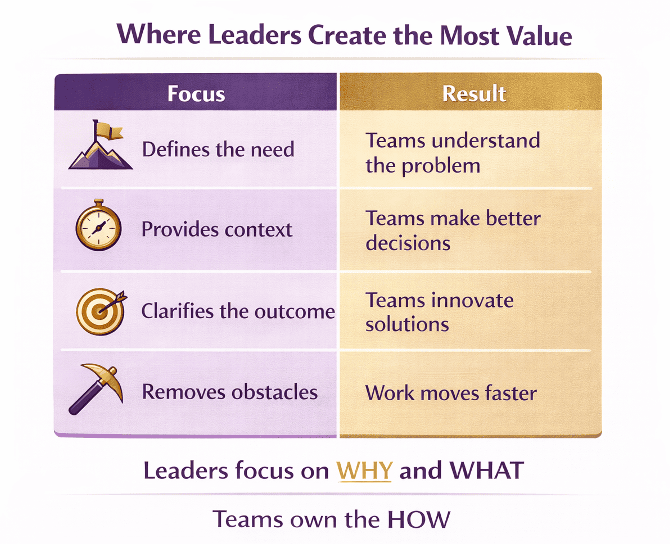
The need The context The desired outcome
And then allow their subject matter experts to determine how the solution should work.
During the discussion, a participant shared a common situation.
A non‑technical manager had already decided what the technical solution should be. The team wasn’t asked to explore options or analyze alternatives—they were simply told what to build.
This creates a difficult position for the analysts and technical experts.
They are responsible for delivering the outcome, yet they were never given the opportunity to apply their expertise to shape the solution.
Ironically, this approach also creates unnecessary work for the leader.
If a leader already knows the exact technical solution, they’ve stepped directly into the weeds of the implementation. That time is now being spent on details rather than on the higher‑value responsibilities only leaders can fulfill.
Great leadership doesn’t mean having every answer.
It means defining the problem clearly enough that great teams can create the solution.
When leaders focus on the what and why, teams can bring creativity, expertise, and ownership to the how.
And when that happens, something powerful shifts: teams become invested partners in achieving the outcome.
Root Cause #2: When Oversight Turns Into Unintentional Micromanagement
Another conversation during the training highlighted a second common dynamic.
A manager had requested to be invited—or at least CC’d—on every meeting the team was holding.
At first glance, that might seem reasonable. Leaders want visibility, after all.
But when we explored the request further, a simple question emerged:
If the leader isn’t expected to contribute to the meeting, why attend?
More importantly: what signal does that send to the team?
Often these requests come from good intentions. Leaders want to stay informed or avoid surprises.
But the unintended message can be something very different: “I don’t trust the team to handle this without oversight.”
When leaders insert themselves into every conversation, two things happen.
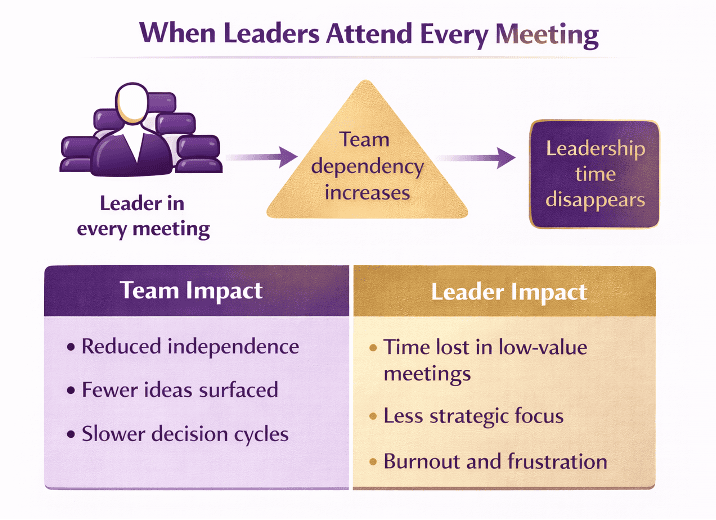
First, the team stops developing the confidence and independence to solve problems on their own.
Second, leaders spend enormous amounts of time in meetings where their presence adds little strategic value.
But actually it is the third that that came up in this discussion (and it is a question that is especially happening around AI that we all should be asking!) – what could the leader be doing if they were NOT in that meeting and spending time down in the teams’ daily activities?
Imagine what that leader could accomplish if they used that same time to:
- Remove organizational roadblocks
- Align stakeholders at the executive level
- Secure resources the team needs
- Provide clarity on strategic direction
Those are the activities that truly enable teams to succeed—and the responsibilities only leadership can fulfill, which doesn’t necessarily happen in team-level meetings.
Where Training Does Deliver Value
Now these are simple scenarios that had us pausing and thinking about what we can do to be most effective in every decision we are making. None of this makes training ineffective.
In fact, the opposite is true.
Training gives professionals the techniques they need to succeed, such as in these scenarios great topics and opportunity came up around:
- How to structure effective questions
- How to clarify stakeholder needs
- How to communicate clearly across teams
- How to document work in ways that drive understanding
- How to facilitate conversations that lead to better decisions
These are practical, immediately usable tools, and they absolutely elevate how teams perform.
But those skills reach their full potential only when the environment allows them to be used.
If analysts are trained to ask great questions—but leadership expects them to simply follow instructions—the skill cannot flourish.
If teams are trained to collaborate and explore solutions—but every decision is predetermined—the creativity disappears.
That’s why culture matters so much.
As the saying goes: culture eats strategy for breakfast.
And it can quietly eat training outcomes too.
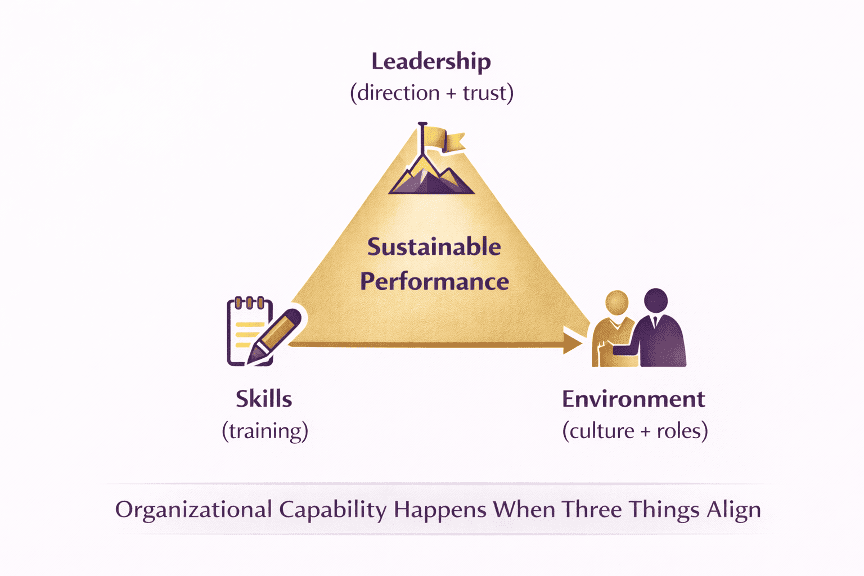
The Real Opportunity: Aligning Skills, Leadership, and Environment
This is where the deeper work begins.
Training equips individuals with capabilities.
But advisory and coaching work helps organizations align the system around those capabilities.
At Champagne Collaborations, we often partner with organizations in a collaborative way for this very purpose. That includes a spectrum of:
- Training teams on practical techniques they can use immediately
- Coaching leaders on how to create environments where those techniques succeed
- Helping teams clarify roles, expectations, and decision boundaries
- Identifying process or communication barriers that prevent progress
Real improvement doesn’t happen in isolation.
It happens when leaders, teams, and facilitators work together in a continuous feedback loop to refine how work actually happens.
Leaders Don’t Need More Control. They Need Better Leverage.
One of the biggest mindset shifts we encourage leaders to consider is this:
Your job is not to solve every problem.
Your job is to create the conditions where great solutions emerge.
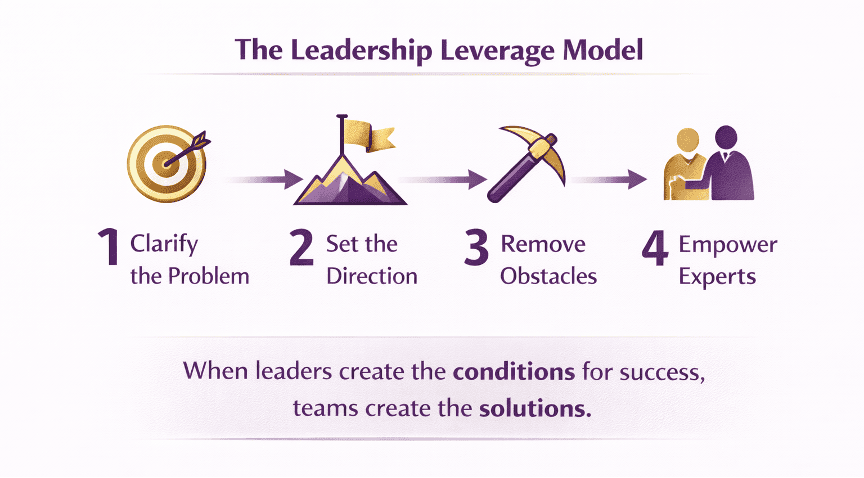
That means:
- Clarifying the problem
- Setting the direction
- Removing obstacles
- Empowering experts to do their best work
When leaders stay focused on those responsibilities, teams rise to the challenge.
They think more critically.
They collaborate more effectively.
And they become partners in delivering outcomes rather than executors of instructions.
That’s when training stops being a classroom experience and starts becoming organizational capability.
A Question Worth Asking
If your organization is investing in training to strengthen communication, collaboration, or analytical thinking, here’s a question worth considering:
Is the environment enabling those skills—or quietly preventing them from being used?
When skills, leadership, and culture align, the results can be remarkable.
And that’s when the real value of training begins to shine.
View our article sharing and reuse policy here